Central vacuum systems are a premium house cleaning solution that improves cleanliness and lowers noise production. They are permanently installed in your homes and make use of hidden pipes to expel things like dust, pollen, and allergens from your interiors. If you’re a curious homeowner looking for the most efficient cleaning solution for your living space, the following blog by So Cal Central Vacuum goes over everything from the key components to the workings and benefits of having a central vacuum system installation.
Understanding A Central Vacuum System: Mechanics & Key Components
Are you tired of lugging around a giant cylinder as you clean your house? Or is it the constant bag replacements that you don’t want to deal with? A central vacuum system is an effective cleaning device that works by suctioning all the dirt and debris to a central power unit that’s located in your garage, utility room, basement, or laundry room.
Homeowners in Orange County, CA simply need to attach lightweight hoses to wall inlets and let the suction system handle the rest. The key components of a central vacuum system include:
- Vacuum Motor: Creates a strong suction that pulls every dust particle and hidden debris through the hose and into the pipes.
- Canister & Filter: This filters the debris and stores it in the canister located off-site.
- Exhaust System: The vents that expel all the dust and debris outside, preventing the recirculation of dirty air.
- Piping Network: The PVC tubes that run behind walls, under floorboards, and above ceilings to carry all the dirt to the central motor.
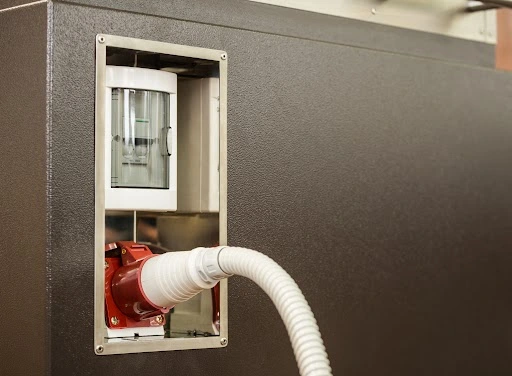
- Wall Inlets: Where users connect the hose so that all the dust can travel through the pipes.
- Hose: used to clean floors, carpets, and upholstery, using different attachments for effective cleaning.
The Workings Of A Central Vacuum System: How The Magic Happens!
Doesn’t that all sound so cool? Even though the general workings of a central vacuum system are similar, the way that the dirt is handled is completely different depending on your system. From dust collection to debris management, here is a look at the way that different central vacuums work.
Read along as we walk you through the process.
- Debris Collection
The first step to cleaning your home with a central vacuum system is to attach a hose to the inlet in the room you want to clean. This will allow the dust to travel through the pipes and reach the filters, vents, or cylinder.
- Attachment Installation
Next, depending on what you want to clean, you should attach the appropriate attachment to the end of the hose. A crevice attachment for corners, a long wand for ceiling fans and blinds, and a brush attachment for floors.
- Debris Management
Once the vacuum is turned on, the central motor starts suctioning all the dirt. The motor is much more powerful than traditional vacuum cleaners—ensuring a deeper clean. Depending on the system you have, the debris will be taken care of in four ways:
- Cyclonic Systems: Spin all the dirt to help it reach the main canister and expel the fine particles through vents.
- Filtered Systems: Filter and trap all the debris. The performance depends on pressure and airflow.
- Bagless Systems: Drop all the debris into a canister, which may sometimes have a filter to protect the motor.
- Wet/Dry Systems: Dispose of liquids and debris directly into the drainage system.
Perks & Pros Of Central Vacuum Systems: Why They’re A Premium Choice
Still with us? Wonderful! Now that you have a perfect understanding of how a central vacuum system operates, you might be wondering about all the advantages of having one on your property. Aside from the obvious ones, here are a few more pros of a central vacuum system for your home.
- Convenient Cleaning: Instead of lugging around a heavy can and bumping into furniture, these central vacuum systems only have a lightweight hose for you to carry.
- Deeper Clean: The central motor is much stronger than that of traditional vacuums, meaning a deeper clean and fluffier carpet.
- Noise Reduction: Since the main motor is housed elsewhere, you don’t have to worry about the loud noise that accompanies traditional vacuums.
Increased Property Value: Since it’s a luxury item, your home will receive a much higher price on the market if you ever sell.
Conclusion
To conclude, a central vacuum system is a convenient and efficient cleaning solution that has revolutionized household chores. It works through a network of hidden pipes and is permanently installed, eliminating the need to balance and carry heavy traditional vacuums from room to room. Depending on the model type, a central vacuum either stores all the dirt in a canister, expels it through vents, or throws it into the drains. We hope this blog helped you understand the workings and benefits of a central vacuum system. For more questions, please drop us a line.
FAQs
What is the lifespan of a central vacuum system?
It usually lasts about twenty years or more.
How often do I need to replace the bags?
Replace them every 3-4 months for efficient performance.
Can I set it up myself?
No. Due to the complex piping and intricate layout, only professionals can install it.
What is a central vacuum system?
A central vacuum system is a built-in cleaning system with a central motor that sucks debris through tubing installed in your walls.
Can a central vacuum system improve indoor air quality?
Yes, it removes dust, allergens, and pet hair from living spaces and stores it in a sealed container away from the home.